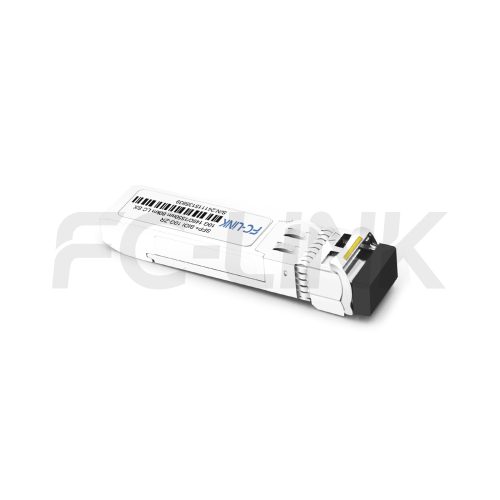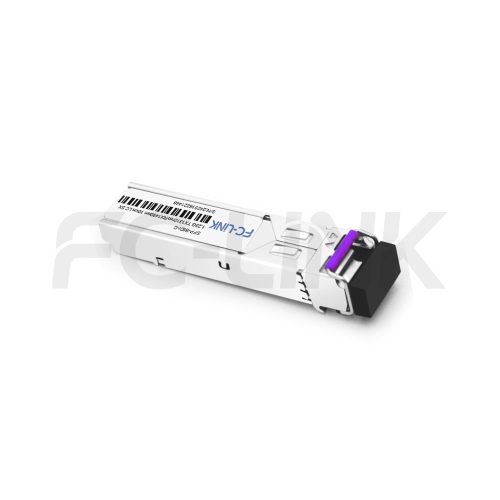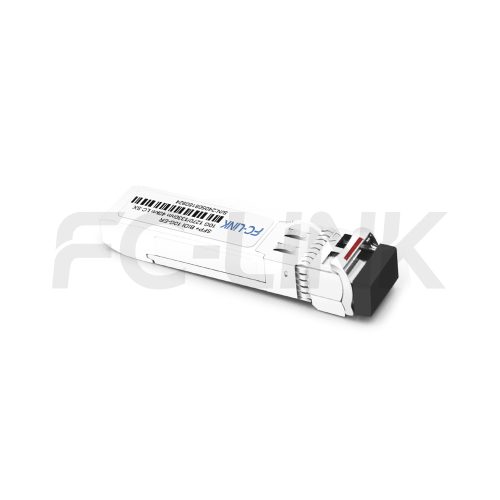
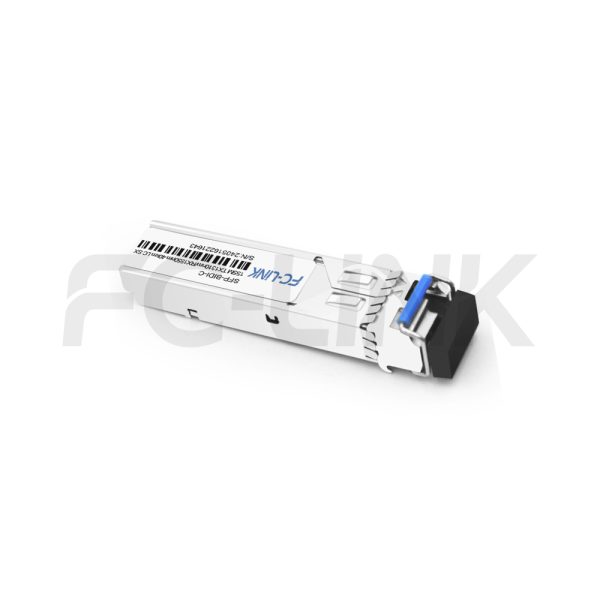
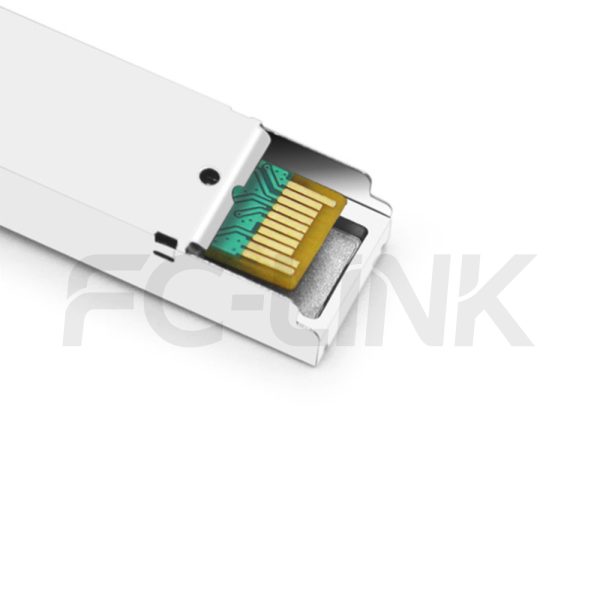
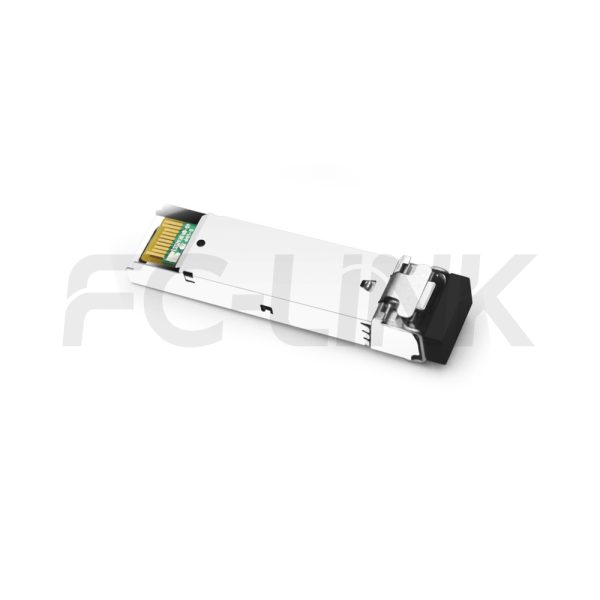
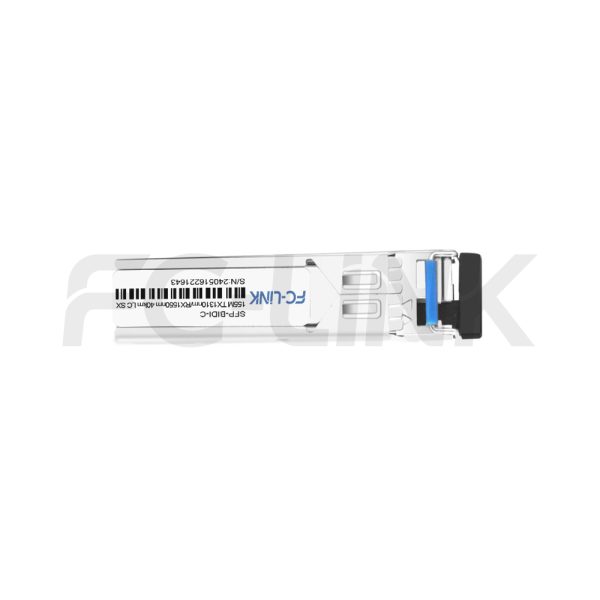
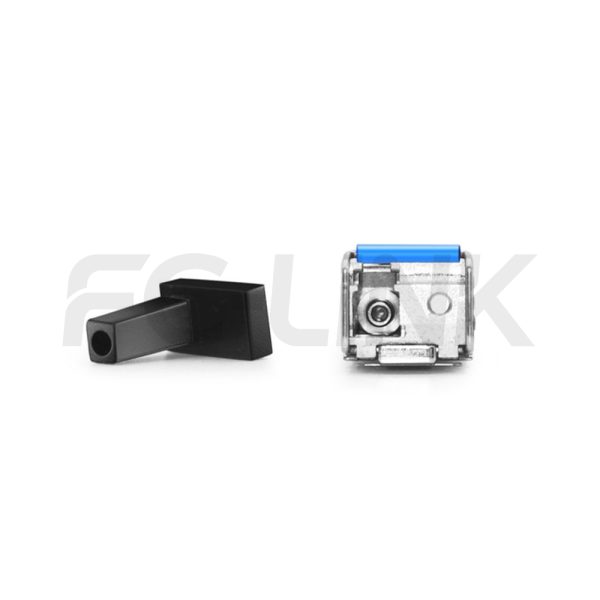
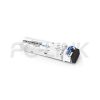
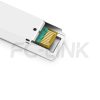
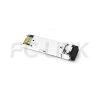
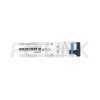
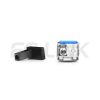
155M SFP BIDI Transceiver for 2/15/40/80km SMF/MMF Links, 1310nm/1550nm Simplex LC/SC

SFPBD-0155-1315-2/15/40/80-LC/SC

  • Broad Multi-Brand Compatibility
  • Flexible Customization Support
  • Tested for Reliable Performance
  • Fast Response & Delivery
  • Professional Technical Support

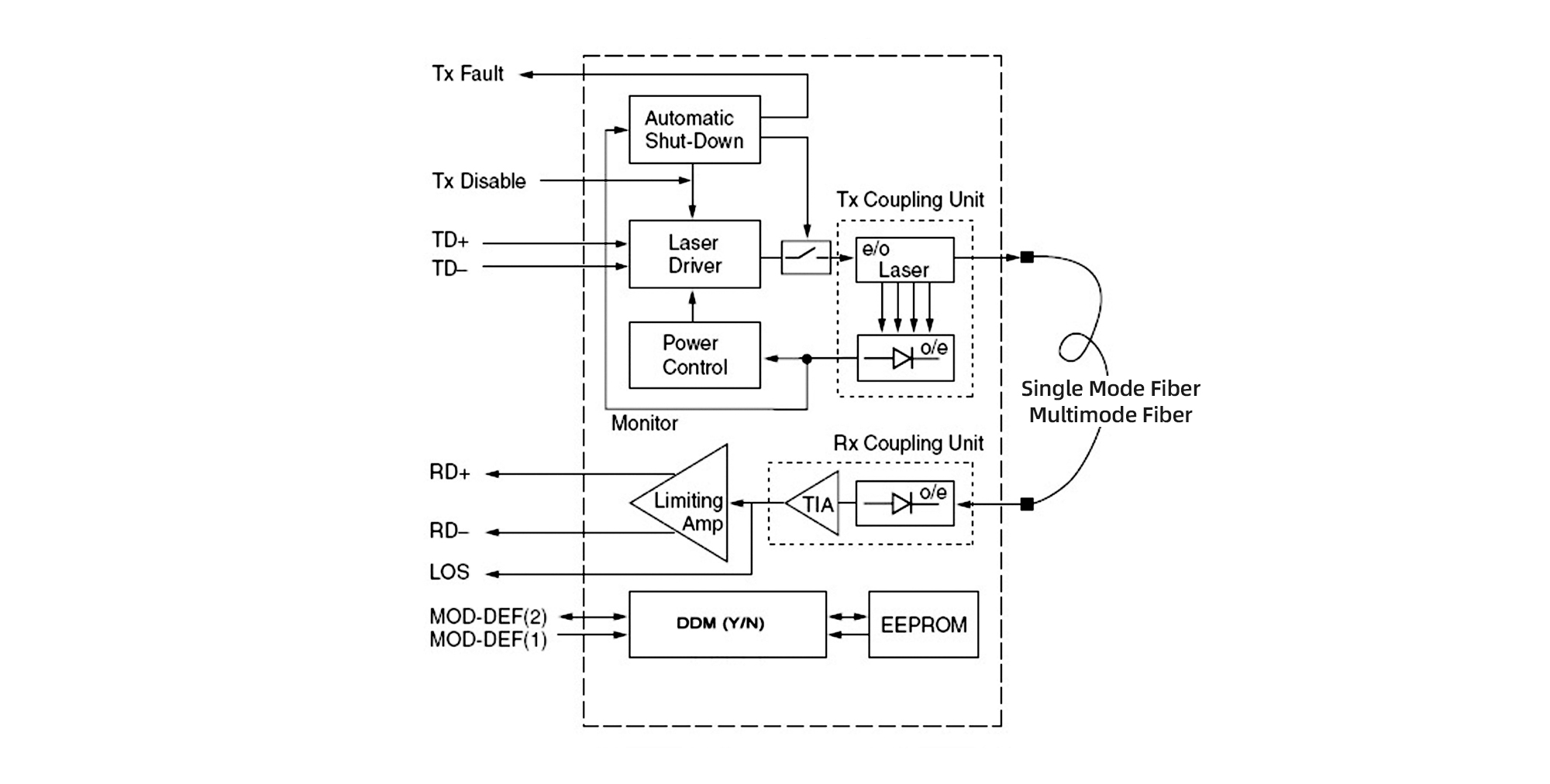
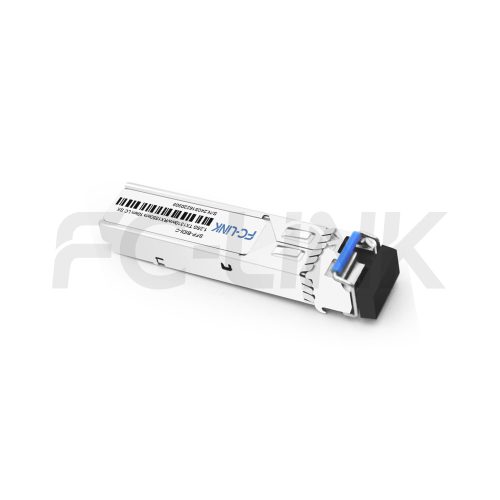
The FC-LINK SFP BIDI 155M 1310/1550nm 2/15/40/80km LC/SC Transceiver series is a compact, small form-factor pluggable module designed for single-fiber bi-directional communication. It supports IEEE 802.3ah 100BASE-BX10/15/40/80 standards and OC-3/STM-1 SONET/SDH applications, utilizing a 1310nm/1550nm transmitter paired with a 1550nm/1310nm receiver. Available for transmission distances of 2km, 15km, 40km, and 80km, this module features a 20-pin SFP connector for hot-plug capability, ensuring easy installation and maintenance.The transmitter section incorporates a high-performance multiple quantum well A-type/B-type laser, compliant with Class 1 laser safety standards under IEC 60825. The receiver section employs an advanced optical detection system, including an integrated A-type/B-type detector preamplifier (IDP) mounted in an optical header and a precision limiting post-amplifier IC, ensuring reliable signal reception and processing.The SFP BIDI 155M 1310/1550nm LC/SC Transceiver series is fully compliant with the SFF-8472 standard, guaranteeing industry-standard compatibility and interoperability for seamless integration into network systems.

SPECIFICATIONS
Product ModelSFPBD-0155-1315-2/15/40/80-LC/SCManufacturer BrandFC-LINK
Package TypeSFPOptical ConnectorLC/SC
Max Data Rate≤ 155MbpsChannel Data Rate-
Effective Transmission Distance2KM 15KM 40KM 80KM
Wavelength1310nm/1550nm
1550nm/1310nm
Operating Voltage3.3V
Fiber Type2KM MMF
15/40/50KM SMF
Core Size2KM 50/125µm
15/40/80KM 9/125µm
Transmitter Type2/15/40KM A type FP 80KM DFB
2/15KM B type FP 40/80KM DFB
Receiver TypeIDP
TX Power2KM '-20~-14dbm
15KM -15~-8dbm
40KM -5~-0dbm
80KM 0~5dbm
Receiver Sensitivity2KM -30dBm
15KM -28dBm
40/80KM -34dBm
Digital Diagnostic Monitoring(DDM)YESReceiver Overload2/15KM -8dBm
40/80KM 0dBm
Power Consumption<1WProtocolsSFP MSA SFF-8472
Operating temperature(Commercial)0℃~+70℃Storage Temperature(Commercial)-40℃~+85℃
Operating temperature(Industrial)-40℃~+85℃Storage Temperature(Industrial)-40℃~+85℃
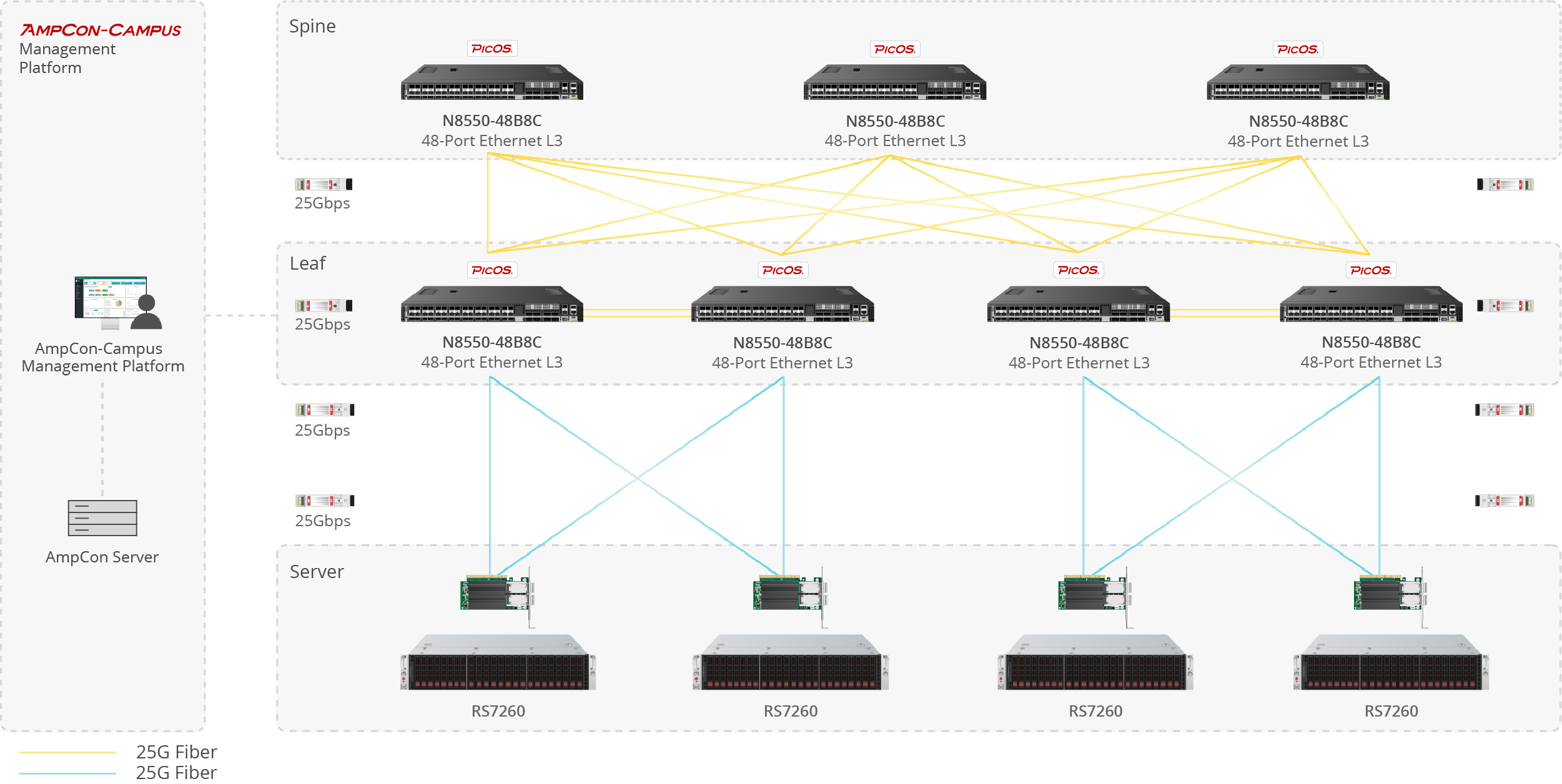
Server-to-Switch Data Center Links

Used for 10G/25G/100G optical uplinks between servers and top-of-rack switches in high-density data center deployments.

Building-to-Building Campus Backbone

Suitable for 1G/10G fiber links between office buildings, campus distribution rooms, and backbone aggregation points.

Access-to-Core Enterprise Uplinks

Designed for switch uplinks from access to aggregation or core layers in enterprise and campus network architectures.

Industrial Switching in Harsh Environments

Applied in industrial Ethernet, automation systems, and outdoor cabinets where wider temperature tolerance and stable fiber communication are required.


网络拓扑展示模块
网络拓扑展示模块
网络拓扑展示模块
网络拓扑展示模块

Compatible Brands

Customization Options

Vendor Coding
Private Label
Custom Part Number
Packaging Design
Temperature Grade Selection
Absolute Maximum Ratings
Parameter Symbol Min. Max. Unit
Storage temperature TS -4.0 +85
Supply voltage VCC -0.5 3.6 V
Operating relative humidity - 5 95 %
Exceeding any one of these values may destroy the device immediately
 
Recommended Operating Environment
Parameter Symbol Min. Typical Max. Unit
Operating case temperature Tc SFPBD-0155-1315-2/15/40/80-LC/SC 0 - +70 °C
-40 - +85
Power supply voltage Vcc 3.15 3.3 3.45 V
Power supply current Icc - - 360 mA
Date rate OC-3 - - 155 - Mbps
100M - - 100 -
 
Performance Specifications – Electrical
Parameter Symbol Min. Typ. Max. Unit Notes
Transmitter
LVPECL inputs(Differential) Vin 400 - 2000 mVpp AC coupled inputs
Input impedance (Differential) Zin 85 100 115 ohm Rin > 100  kohm @ DC
TX_disable Disable - 2 - Vcc+0.3 V -
Enable - 0 - 0.8 -
TX_FAULT Fault - 2 - Vcc+0.3 V -
Normal - 0 - 0.5 -
Receiver
LVPECL outputs (Differential) Vout 400 - 2000 mVpp AC coupled output
Output impedance (Differential) Zout 85 100 115 ohms -
RX_LOS LOS - 2 - Vcc+0.3 V -
Normal - 0 - 0.8 V -
MOD_DEF ( 0:2 ) VoH 2.5 - - V With serial ID
VoL 0 - 0.5 V
 
Optical and Electrical Characteristics
Parameter Symbol Unit 1310nm FP and PIN, 2km 1310nm FP and PIN, 15km 1310nm FP and PIN, 40km 1310nm DFB and PIN, 80km
Min. Typical Max. Min. Typical Max. Min. Typical Max. Min. Typical Max.
50µm core diameter MMF (800Mhz*km) L km - - 2 - - - - - - - - -
62.5 core diameter MMF (500Mhz*km) L km - - 1 - - - - - - - - -
9µm core diameter SMF L km - - - - 15 - - 40 - - 80 -
Data rate - Mbps - 155 - 100 155 - - 155 - - 100/155 -
Transmitter
Center wavelength λC nm 1260 1310 1360 1260 1310 1360 1260 1310 1360 1260 1310 1360
Spectral width (RMS) Δλ nm - - 4 - - 4 - - 3 - - 1
Average output power Pout dBm -20 - -14 -15 - -8 -5 - 0 0 - 5
Extinction ratio ER dB 9 - - 8.2 - - 10 - - 10 - -
Rise/Fall time(20%~80%) tr/tf ns - - 2 - - 2 - - 2 - - 2
Output optical eye - - IUT-T G.957 compliant IUT-T G.957 compliant IUT-T G.957 compliant IUT-T G.957 Compliant
TX disable assert time t_off us - - 10 - - 10 - - 10 - - 10
TX disable asserted - dBm - - -45 - - -45 - - -45 - - -45
Receiver
Center wavelength λC nm 1500 1550 1580 1500 1550 1580 1500 1550 1580 1500 1550 1600
Receiver sensitivity Pmin dBm - - -30 - - -29 - - -34 - - -34
Receiver overload Pmax dBm - - - -8 - - 0 - - 0 - -
LOS de-assert LOSD dBm - - -31 - - -30 - - -35 - - -35
LOS assert LOSA dBm -45 - - -42 - - -45 - - -45 - -
LOS hysteresis - dB 1 - 6 0.5 - 6 0.5 - 6 0.5 - -
 
Optical and Electrical Characteristics
Parameter Symbol Unit 1550nm FP and PIN, 2km 1550nm FP and PIN, 15km 1550nm DFB and PIN, 40km 1550nm DFB and PIN, 80km
Min. Typical Max. Min. Typical Max. Min. Typical Max. Min. Typical Max.
50µm core diameter MMF (800Mhz*km) L km - - 2 - - - - - - - - -
62.5 core diameter MMF (500Mhz*km) L km - - 1 - - - - - - - - -
9µm core diameter SMF L km - - - - 15 - - 40 - - 80 -
Data rate - Mbps - 125 - - 155 - - 155 - - 100/155 -
Transmitter
Center wavelength λC nm 1500 1550 1580 1500 1550 1600 1500 1550 1600 1530 1550 1570
Spectral width (RMS) Δλ nm - - 4 - - 4 - - 1 - - 1
Average output power Pout dBm -20 - -14 -15 - -8 -5 - 0 0 - 5
Extinction ratio ER dB 9 - - 8.2 - - 10 - - 10 - -
Rise/Fall time(20%~80%) tr/tf ns - - 2 - - 2 - - 2 - - 2
Output optical eye - - IUT-T G.957 compliant IUT-T G.957 compliant IUT-T G.957 compliant IUT-T G.957 Compliant
TX disable assert time t_off us - - 10 - - 10 - - 10 - - 10
TX disable asserted - dBm - - -45 - - -45 - - -45 - - -
Receiver
Center wavelength λC nm 1260 - 1360 1260 1310 1360 1260 1310 1360 1260 - 1360
Receiver sensitivity Pmin dBm - - -30 - - -29 - - -34 - - -34
Receiver overload Pmax dBm - - - -8 - - 0 - - 0 - -
LOS de-assert LOSD dBm - - -31 - - -30 - - -35 - - -35
LOS assert LOSA dBm -45 - - -42 - - -45 - - -45 - -
LOS hysteresis - dB 1 - 6 0.5 - - 0.5 - - 0.5 - -
FUNCTIONAL DESCRIPTION of TRANSCEIVER

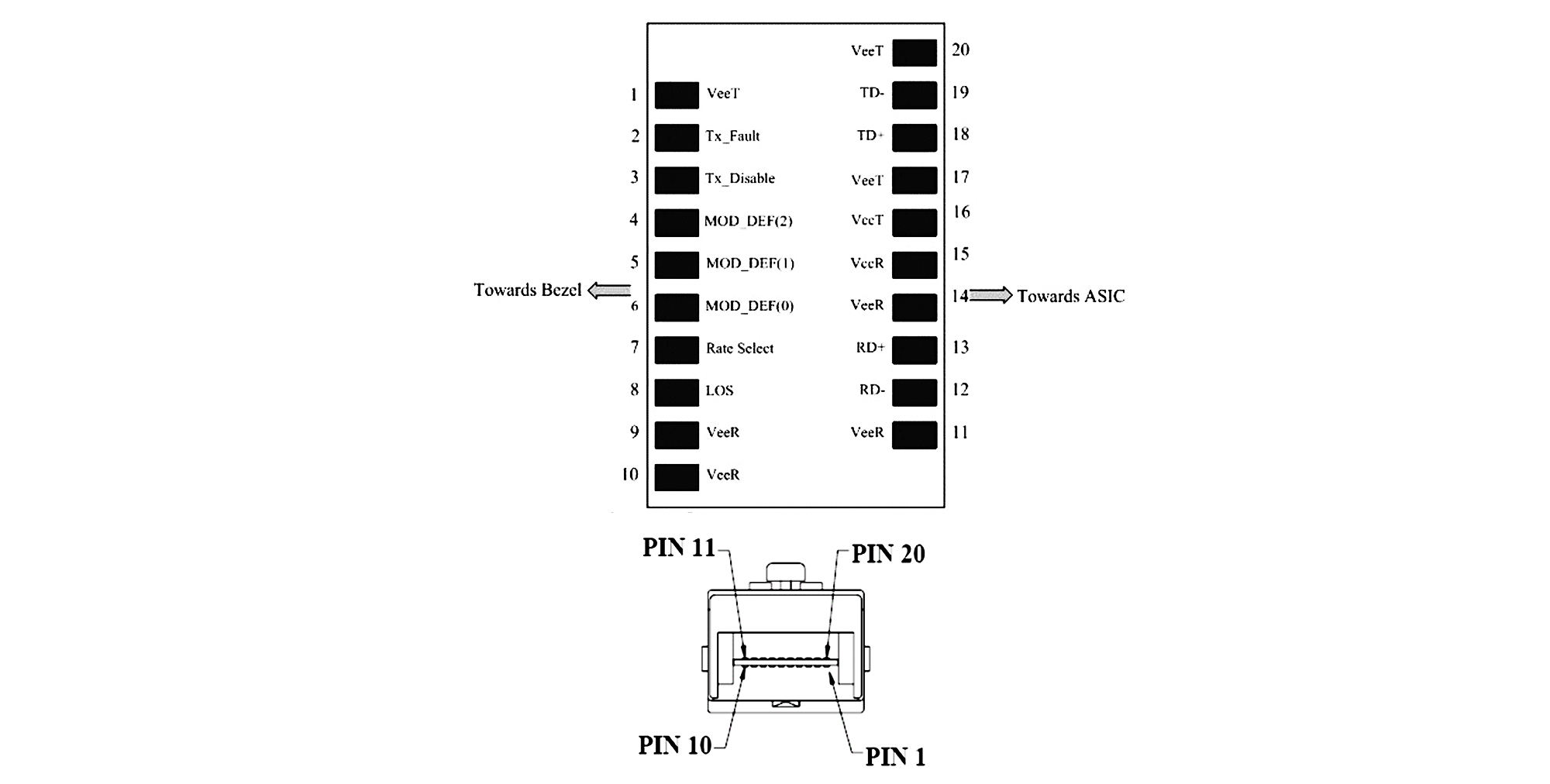
SFP TRANSCEIVER ELECTRICAL PAD LAYOUT

PIN FUNCTION DEFINITIONS
Pin Name Function Plug Seq. Notes
1 VeeT Transmitter ground 1 5)
2 TX fault Transmitter fault indication 3 1)
3 TX disable Transmitter disable 3 2) Module disables on high or open
4 MOD-DEF2 Module definition 2 3 3) Data line for serial ID.
5 MOD-DEF1 Module definition 1 3 3) Clock line for serial ID.
6 MOD-DEF0 Module definition 0 3 3) Grounded within the module.
7 Rate select Not connect 3 Function not available
8 LOS Loss of signal 3 4)
9 VeeR Receiver ground 1 5)
10 VeeR Receiver ground 1 5)
11 VeeR Receiver ground 1 5)
12 RD- Inv. received data out 3 6)
13 RD+ Received data out 3 6)
14 VeeR Receiver ground 1 5)
15 VccR Receiver power 2 7) 3.3V ± 5%
16 VccT Transmitter power 2 7) 3.3V ± 5%
17 VeeT Transmitter ground 1 5)
18 TD+ Transmit data In 3 8)
19 TD- Inv. transmit data In 3 8)
20 VeeT Transmitter ground 1 5)
Notes:
1) TX Fault is an open collector/drain output, which should be pulled up with a 4.7K – 10KΩ resistor on the host board. Pull up voltage between 2.0V and VccT/R+0.3V. When high, output indicates a laser fault of some kinds. Low indicates normal operation. In the low state, the output will be pulled to < 0.8V.

2) TX disable is an input that is used to shutdown the transmitter optical output. It is pulled up within the module with a 4.7K – 10 KΩ resistor. Its states are:
Low (0 – 0.8V): Transmitter on
 (>0.8, < 2.0V): Undefined
High (2.0 – 3.465V): Transmitter Disabled
Open: Transmitter Disabled

3) Modulation Absent, connected to VEET or VEER in the module.

4) LOS is an open collector/drain output, which should be pulled up with a 4.7K – 10KΩ resistor. Pull up voltage between 2.0V and VccT/R+0.3V. When high, this output indicates the received optical power is below the worst-case receiver sensitivity (as defined by the standard in use).Low indicates normal operation. In the low state, the output will be pulled to < 0.8V.

5) VeeR and VeeT may be internally connected within the SFP module.

6) RD-/+: These are the differential receiver outputs. They are AC coupled 100Ω differential lines which should be terminated with 100Ω (differential) at the user SERDES. The AC coupling is done inside the module and is thus not required on the host board. The voltage swing on these lines will be between 400 and 2000 mV differential (200 –1000 mV single ended) when properly terminated.

7) VccR and VccT are the receiver and transmitter power supplies. They are defined as 3.3V ±5% at the SFP connector pin. Maximum supply current is 300Ma. Recommended host board power supply filtering is shown below. Inductors with DC resistance of less than 1ohm should be used in order to maintain the required voltage at the SFP input pin with 3.3V supply voltage. When the recommended supply-filtering network is used, hot plugging of the SFP transceiver module will result in an inrush current of no more than 30Ma greater than the steady state value.VccR and VccT may be internally connected within the SFP transceiver module.

8) TD-/+: These are the differential transmitter inputs. They are AC-coupled, differential lines with 100Ω differential termination inside the module. The AC coupling is done inside the module and is thus not required on the host board. The inputs will accept differential swings of 500 – 2400 mV (250 – 1200mV single-ended), though it is recommended that values between 500 and 1200 mV differential (250 – 600mV single-ended) be used for best EMI performance.
Performance Testing

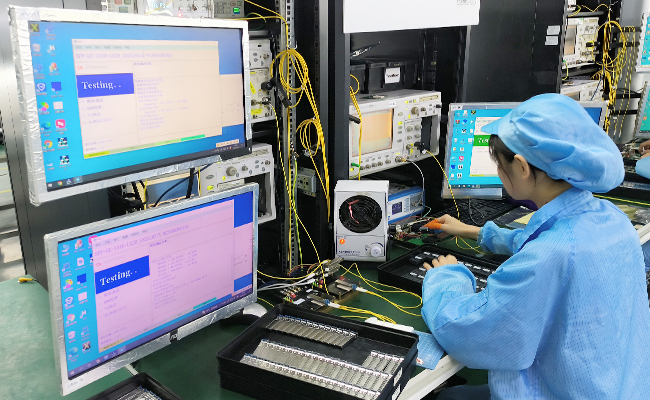
Each module is tested before shipment to help ensure stable optical and electrical performance.
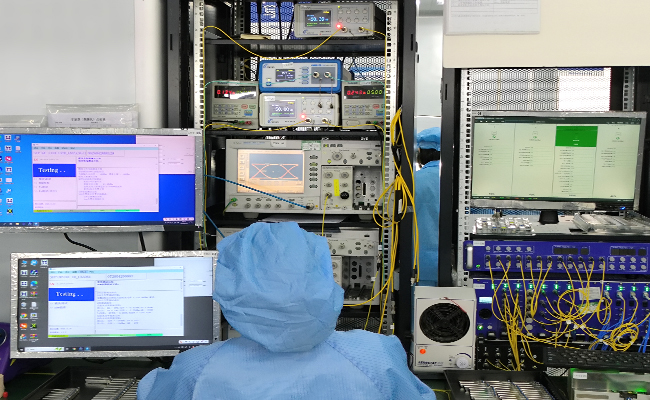
Compatibility Verification

Compatibility validation is available for major switch and router platforms.
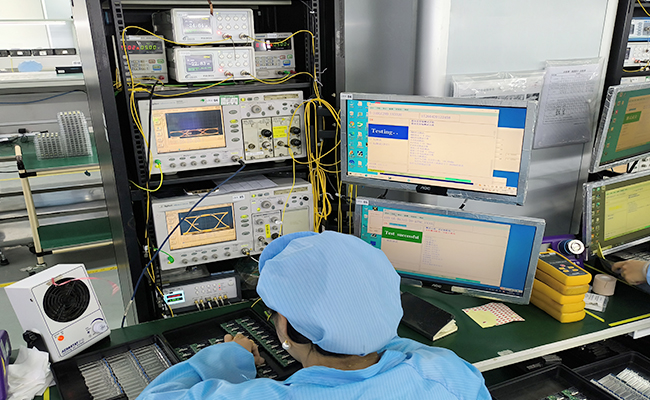
Reliability Screening

Selected products support aging, temperature cycle, and stability testing for demanding applications.
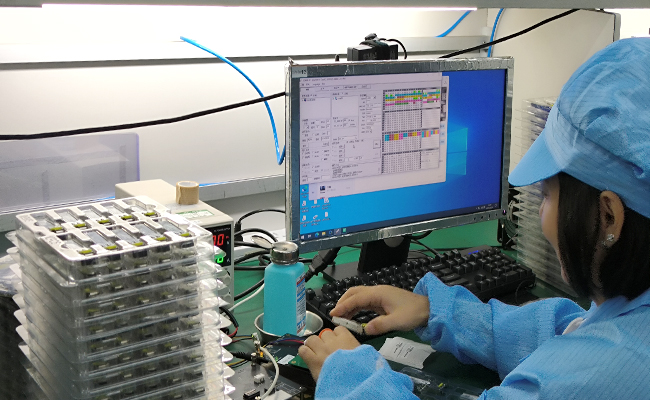
Traceable Quality Control

Inspection and production records support more consistent quality control and batch traceability.

光模块产品详情订购信息---SFP