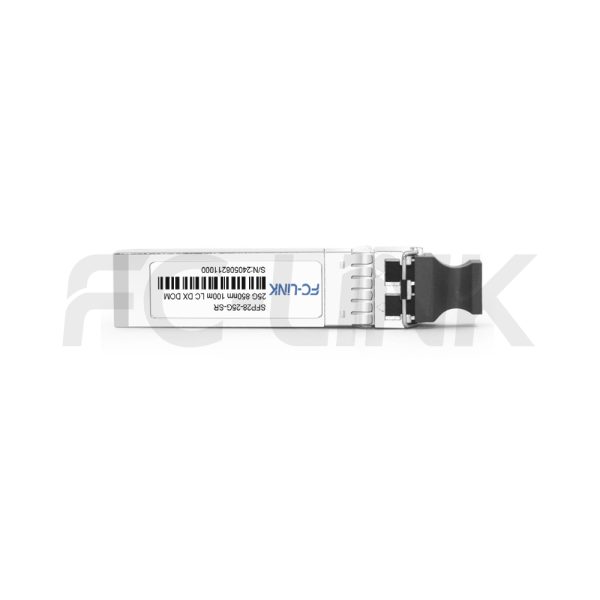
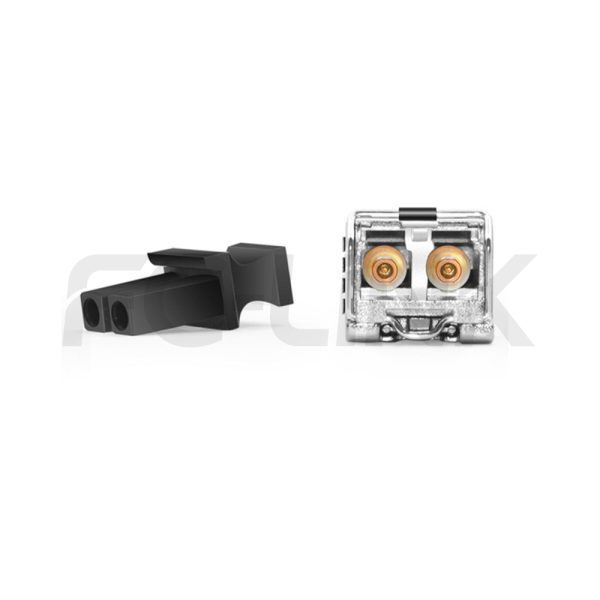
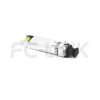
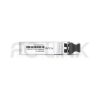
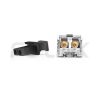


25G SFP28 SR Transceiver for 100m MMF Links, 850nm Duplex LC
SFP28-25-85-01(SR)-LCD
- Broad Multi-Brand Compatibility
- Flexible Customization Support
- Tested for Reliable Performance
- Fast Response & Delivery
- Professional Technical Support
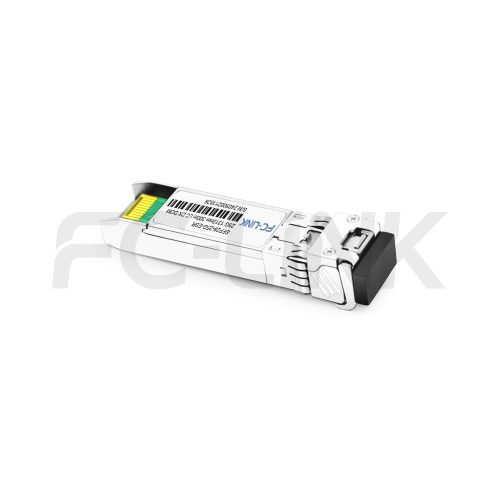
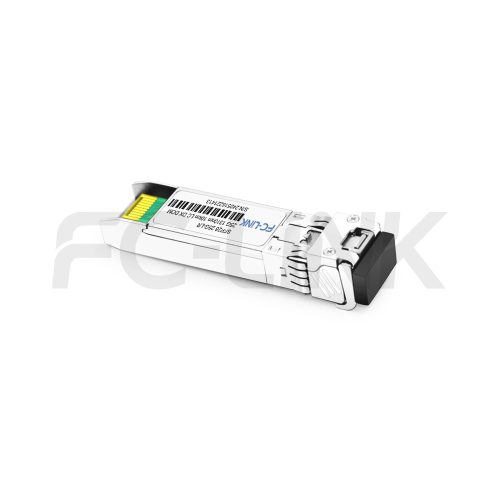
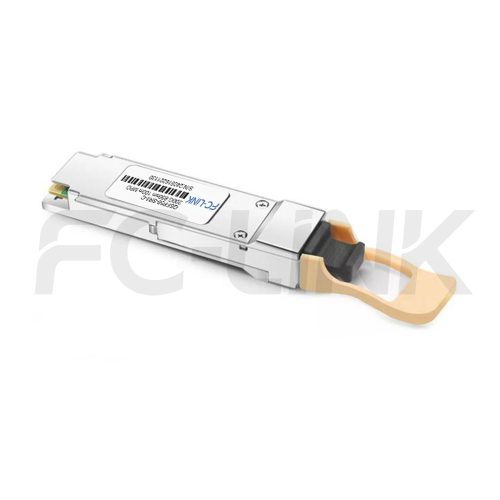
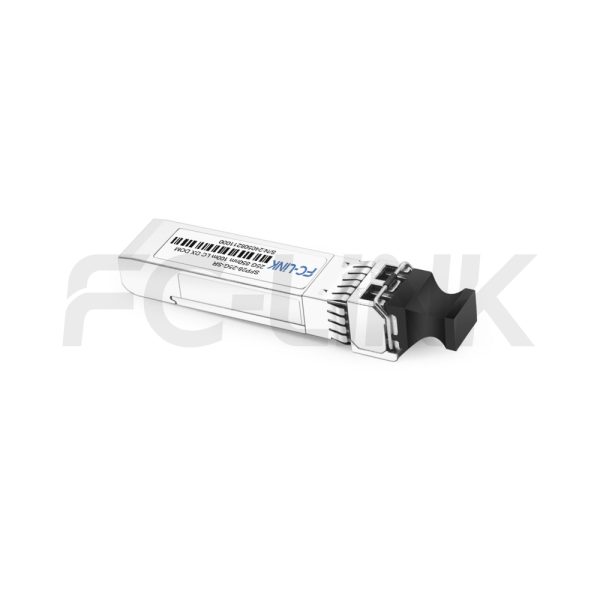
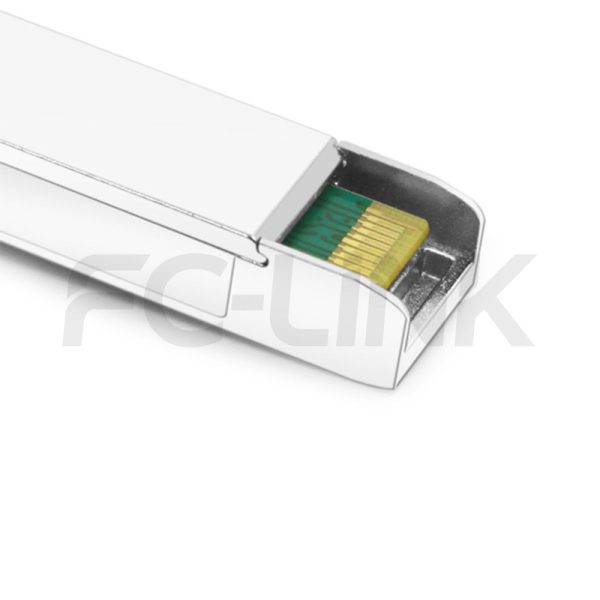
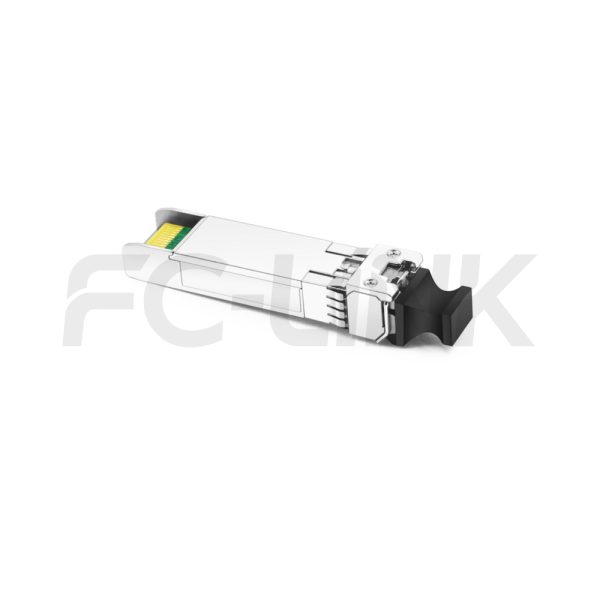
The FC-LINK SFP28 25G 850nm 100m SR LC DX transceiver is optimized for 25.78Gbps data transmission over multimode fiber. Fully compliant with the SFF-8431 standard, its SFP+ mechanical design is compatible with the SFF-8432 specification.This module supports digital diagnostic monitoring through a 2-wire serial interface, as outlined in the SFF-8472 standard, ensuring precise performance monitoring and simplified network management.

| SPECIFICATIONS | |||
|---|---|---|---|
| Product Model | SFP28-25-85-01(SR)-LCD | Manufacturer Brand | FC-LINK |
| Package Type | SFP28 | Optical Connector | Duplex LC |
| Max Data Rate | 25.78G | Channel Data Rate | 10.31Gbps |
| Effective transmission distance(OM3) | 70m | Effective transmission distance(OM4) | 100m |
| Wavelength | 850nm | Operating Voltage | 3.3V |
| Fiber Type | MMF | Core Size | 50/125µm |
| Transmitter Type | VCSEL | Receiver Type | PIN |
| TX Power | -8.4~2.4dbm | Receiver Sensitivity | <-6dBm |
| Digital Diagnostic Monitoring(DDM) | YES | Receiver Overload | 2.4dBm |
| Power Consumption | <1.0W | Protocols | SFF-8472, SFF-8024, SFF-8431, SFF-8432 |
| Operating temperature(Commercial) | 0℃~+70℃ | Storage Temperature(Commercial) | -40℃~+85℃ |
| Operating temperature(Industrial) | -40℃~+85℃ | Storage Temperature(Industrial) | -40℃~+85℃ |

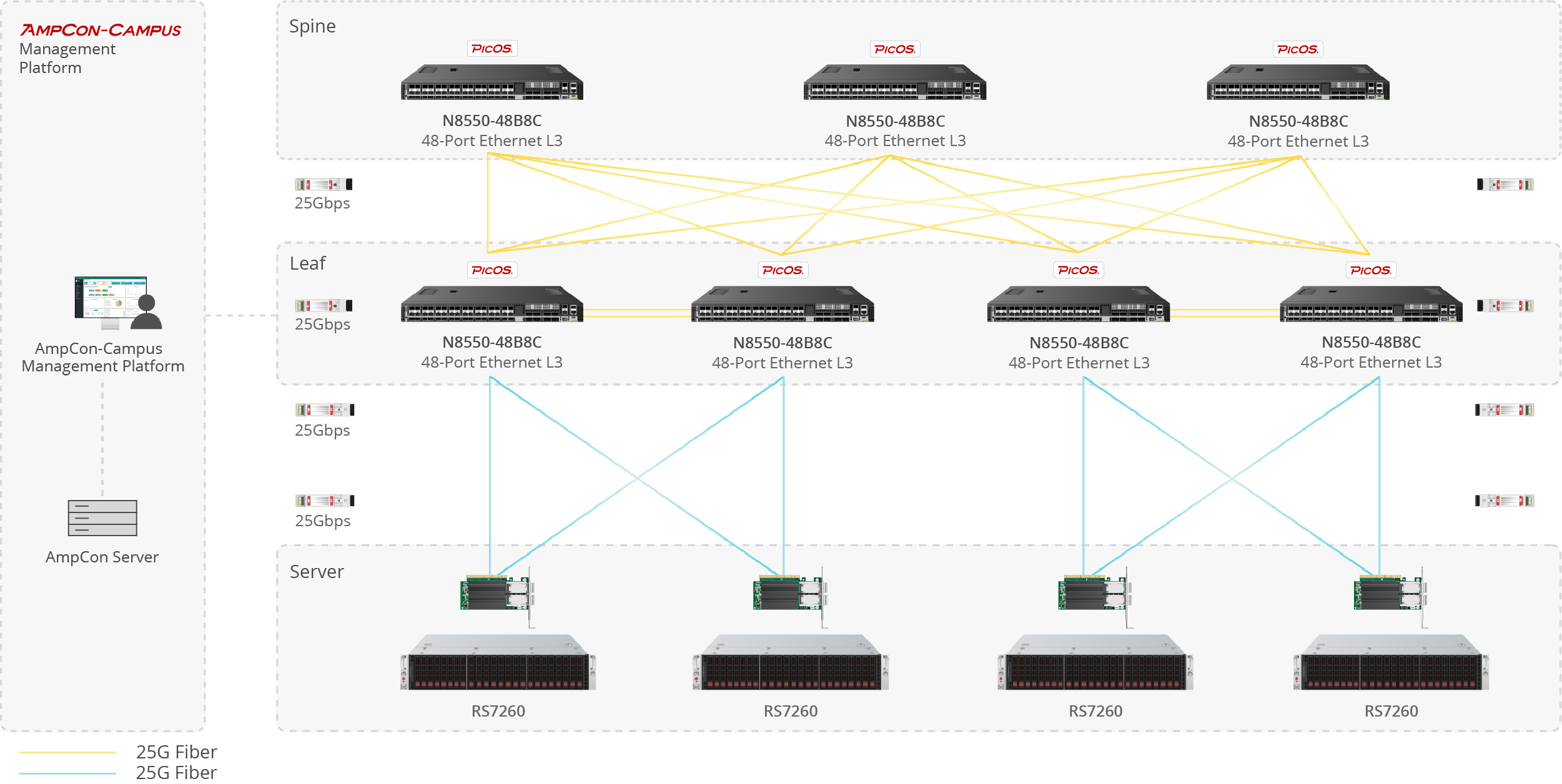
Server-to-Switch Data Center Links
Used for 10G/25G/100G optical uplinks between servers and top-of-rack switches in high-density data center deployments.

Building-to-Building Campus Backbone
Suitable for 1G/10G fiber links between office buildings, campus distribution rooms, and backbone aggregation points.

Access-to-Core Enterprise Uplinks
Designed for switch uplinks from access to aggregation or core layers in enterprise and campus network architectures.

Industrial Switching in Harsh Environments
Applied in industrial Ethernet, automation systems, and outdoor cabinets where wider temperature tolerance and stable fiber communication are required.
| Absolute Maximum Ratings | |||||||||
| Parameter | Symbol | Min. | Max. | Unit | |||||
| Supply voltage | Vcc | -0.3 | +4.0 | V | |||||
| Storage temperature | Ts | -40 | +85 | ℃ | |||||
| Operating humidity | RH | 0 | +85 | % | |||||
| General Specifications | |||||||||
| Parameter | Symbol | Min | Typ. | Max | Unit | ||||
| Bit rate | BR | - | 25.78 | - | Gbps | ||||
| Bit Error ratio | BER | - | - | 5*10E-5 | - | ||||
| Max. supported link length | Lmax | - | - | 100 | m | ||||
| Recommended Operating Conditions | |||||||||
| Parameter | Symbol | Min. | Typ. | Max. | Unit | ||||
| Operating temperature | Tc | 0 | - | +70 | °C | ||||
| Power supply voltage | Vcc | 3.1 | 3.3 | 3.46 | V | ||||
| Bit rate | BR | - | 25.78 | - | Gbps | ||||
| Max. supported link length | LMAX | - | - | 100 | m | ||||
| Electrical Characteristics | |||||||||
| Parameter | Symbol | Min. | Typ. | Max | Unit | Note | |||
| Supply voltage | Vcc | 3.14 | 3.3 | 3.46 | V | - | |||
| Supply current | Icc | - | - | 230 | mA | - | |||
| Transmitter | |||||||||
| Input differential impedance | RIN | 80 | 100 | 120 | Ω | 1 | |||
| Single ended data input swing | VIN | 90 | - | 150 | mVp-p | - | |||
| Transmit disable voltage | VDIS | 2 | - | VCCHOST | V | - | |||
| Transmit enable voltage | VEN | VEE | - | VEE+0.8 | V | - | |||
| Transmit fault assert voltage | VFA | 2 | - | VCCHOST | V | - | |||
| Transmit fault de-assert voltage | VFDA | VEE | - | VEE+0.8 | V | - | |||
| Receiver | |||||||||
| Single ended data output swing | VOD | 200 | - | 500 | mVpp | - | |||
| LOS fault | VLOSFT | 2 | - | VCCHOST | V | - | |||
| LOS normal | VLOSFT | VEE |
-
|
- | |||||
| *Notes:Differential between TD+ / TD–. | |||||||||
| Optical Characteristics | |||||||||
| Parameter | Symbol | Min. | Typ. | Max. | Unit | Note | |||
| Transmitter | |||||||||
| Nominal wavelength | λ | 840 | - | 860 | nm | - | |||
| Spectral width | ∆λ | - | - | 0.6 | nm | - | |||
| Optical modulation amplitude | POMA | -6.4 | - | 3 | dBm | - | |||
| Optical output power | POFF | -8.4 | - | 2.4 | dBm | - | |||
| Extinction ratio | ER | 2 | - | - | dB | - | |||
| Transmitter dispersion penalty | TDP | - | - | 5 | dB | - | |||
| Average launch power of OFF Transmitter | POFF | - | - | -30 | dBm | - | |||
| Receiver | |||||||||
| Center wavelength | λ | 840 | - | 860 | nm | - | |||
| Average receiver power | PAVG | -10.3 | - | 2.4 | dBm | 1 | |||
| Stressed receiver sensitivity(OMA) | RSENSE | - | - | -5.2 | dBm | 2 | |||
| Receiver reflectance | RREFL | - | - | -12 | dB | - | |||
| Assert LOS | LOSA | -30 | - | - | dBm | - | |||
| De-assert LOS | LOSD | - | - | -13 | dBm | - | |||
| LOS hysteresis | 0.5 | dB | - | ||||||
| Notes: 1. Sensitivity for 25.78G PRBS 231-1 and BER better than or equal to 5*10E-5. 2. The stressed sensitivity values in the table are for system level BER measurements which include the effects of CDR circuit. | |||||||||
| PIN ASSIGNMENT |
| Pin Number | Symbol | Name | Description | ||||||
| 1,17,20 | VeeT | Transmitter signal ground | These pins should be connected to signal groundon the host board. | ||||||
| 2 | TX fault | Transmitter fault out (OC) | Logic “1” output = Transmitter fault Logic “0” output = Normal operation This pin is open collector compatible, and should be pulled up to host Vcc with a 10kΩ resistor. |
||||||
| 3 | TX disable | Transmitter disable in (LVTTL) | Logic “1” input (or no connection) = Laser off Logic “0” Input = Laser on This pin is internally pulled up to VccT with a 10 kΩ resistor |
||||||
| 4 | SDA | Module definition identifiers | Serial ID with SFF 8472 diagnostics module definition pins should be pulled up to Host Vcc with 10 kΩ resistors. |
||||||
| 5 | SCL | ||||||||
| 6 | MOD-ABS | ||||||||
| 7 | RS0 | Receiver rate select (LVTTL) Transmitter rate select (LVTTL) |
NA | ||||||
| 9 | RS1 | - | NA | ||||||
| 8 | LOS | Loss of signal out (OC) | This pin is open collector compatible, and should be pulled up to host Vcc with a 10kΩ resist |
||||||
| 10,11,14 | VeeR | Receiver signal ground | These pins should be connected to signal groundon the host board. | ||||||
| 12 | RD- | Receiver negative DATA out (CML) | Light on = logic “0” output receiver DATA output is internally AC coupled and series terminated with a 50Ω resistor. | ||||||
| 13 | RD+ | Receiver positive DATA out(CML) | Light on = Logic “1” output receiver DATA output is internal ly AC coupled and series terminated with a 50 Ω resistor. |
||||||
| 15 | VccR | Receiver power supply | This pin should be connected to a filtered +3.3V power supply on the host board. See figure 3.recommended power supply filter | ||||||
| 16 | VccT | Transmitter power supply | This pin should be connected to a filtered +3.3V power supply on the host board. See figure 3.recommended power supply filter | ||||||
| 18 | TD+ | Transmitter positive DATA in(CML) | Logic “1” input = light on transmitter DATA inputs are internally AC coupled and terminated with a differential 100Ω resistor. | ||||||
| 19 | TD- | Transmitter negative DATA in(CML) | Logic “0” input = light on transmitter DATA inputs are internally AC coupled and terminated with a differential 100Ω resistor. | ||||||

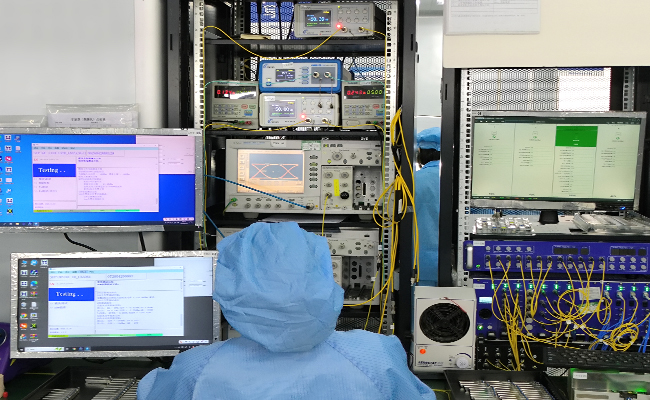
Performance Testing
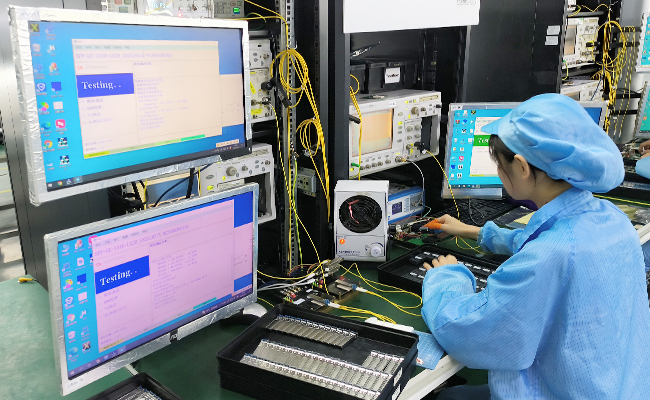
Each module is tested before shipment to help ensure stable optical and electrical performance.
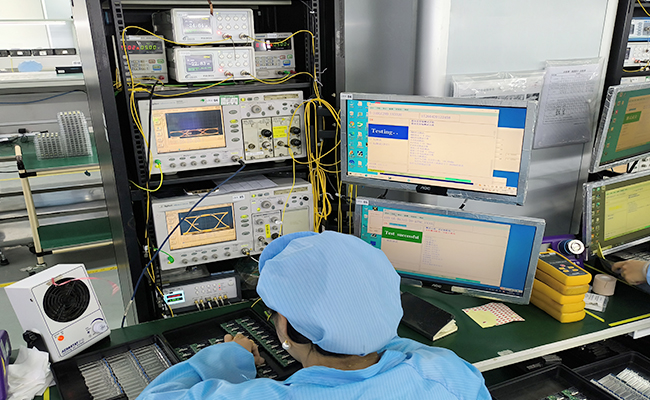
Compatibility Verification
Compatibility validation is available for major switch and router platforms.
Reliability Screening
Selected products support aging, temperature cycle, and stability testing for demanding applications.
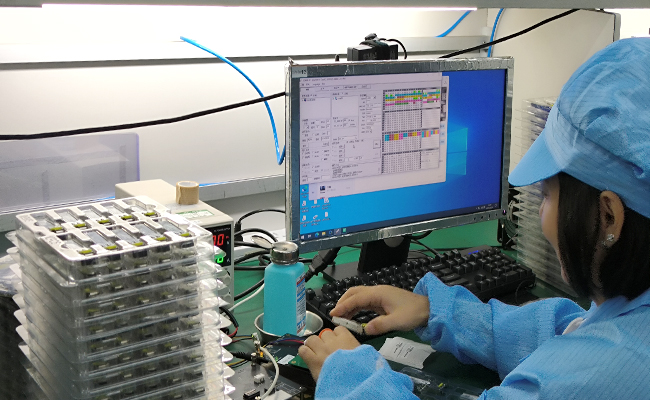
Traceable Quality Control
Inspection and production records support more consistent quality control and batch traceability.