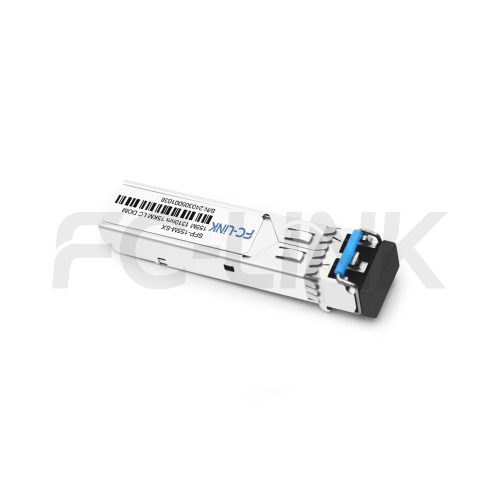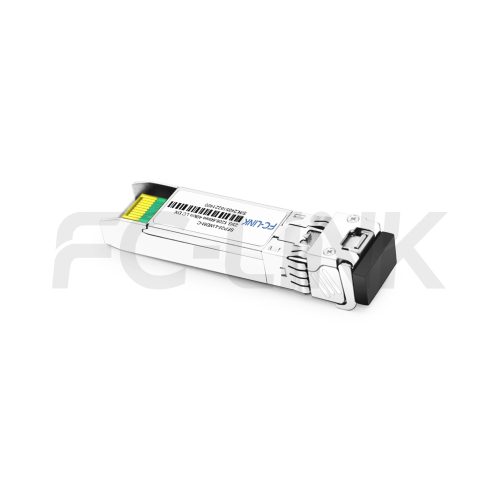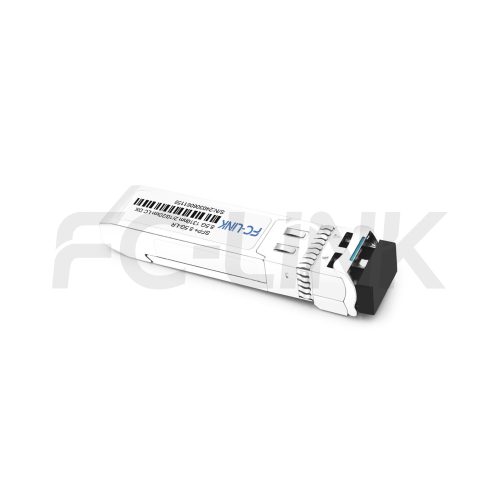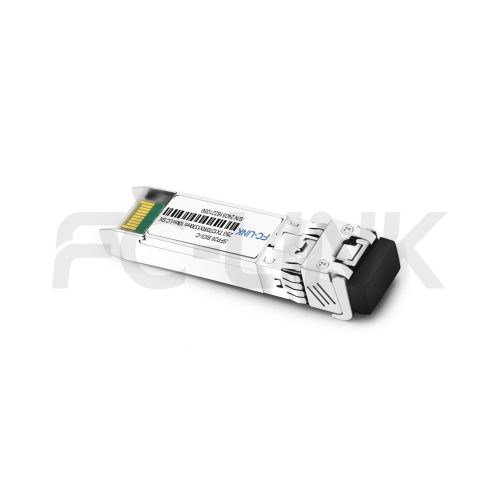
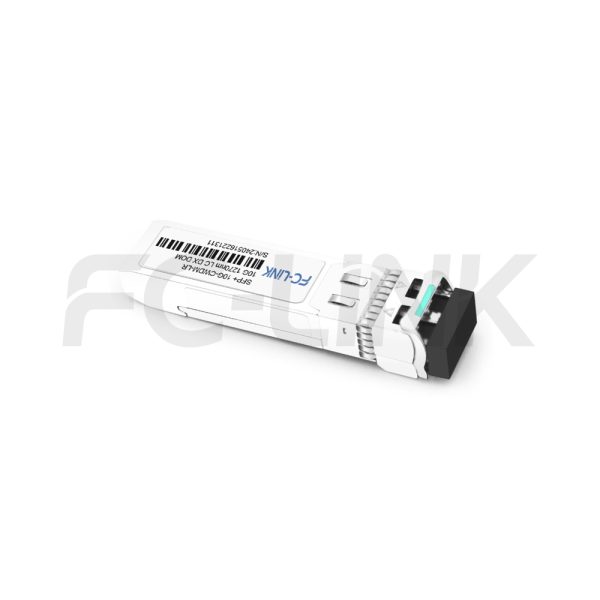
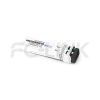
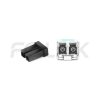
10G CWDM SFP+ LR Transceiver for SMF Links, 1270nm to 1610nm Duplex LC

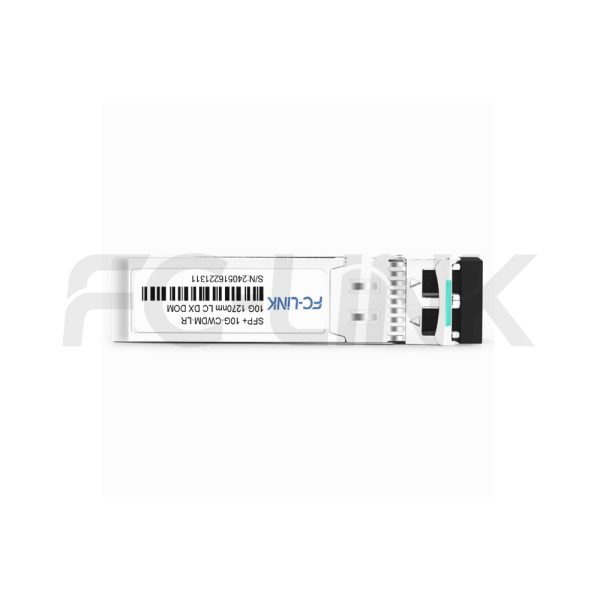
SFP+10-CW1216-LR-LCD

  • Broad Multi-Brand Compatibility
  • Flexible Customization Support
  • Tested for Reliable Performance
  • Fast Response & Delivery
  • Professional Technical Support

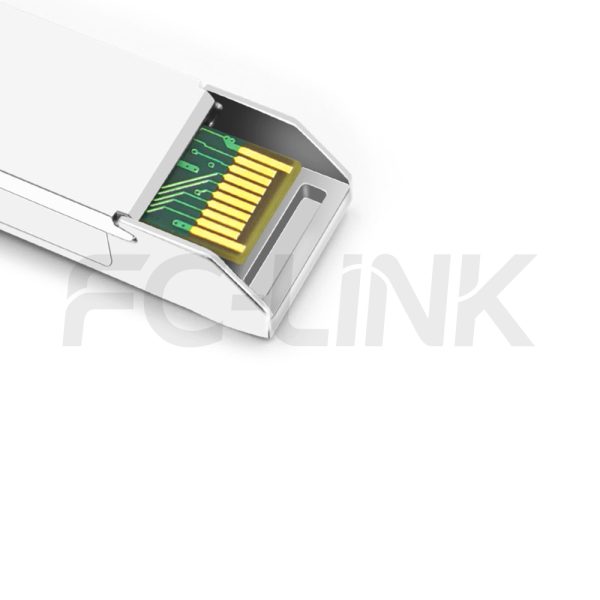
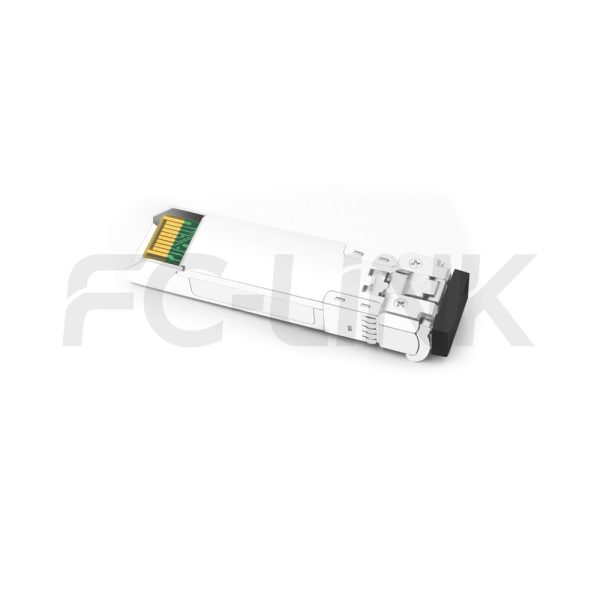
The FC-LINK SFP+ 10G CWDM (1270-1610nm) LR LC DX series optical transceiver is specifically designed for fiber communication applications such as 10G Ethernet (10GBASE-LR/LW). Fully compliant with the SFP+ MSA specification SFF-8431, this module supports single-mode fiber operation at CWDM wavelengths, offering multiple center wavelengths ranging from 1270nm to 1610nm, with 20nm increments.Featuring an SFP+ connector for hot-plug capability, the module requires a single 3.3V power supply. Key functions include TX_DIS for disabling the optical output via LVTTL logic high input and RX_LOS to indicate the loss of an input optical signal. Additionally, it supports digital diagnostic monitoring via a 2-wire serial interface as per the SFF-8472 specification.

SPECIFICATIONS
Product ModelSFP+10-CW1216-LR-LCDManufacturer BrandFC-LINK
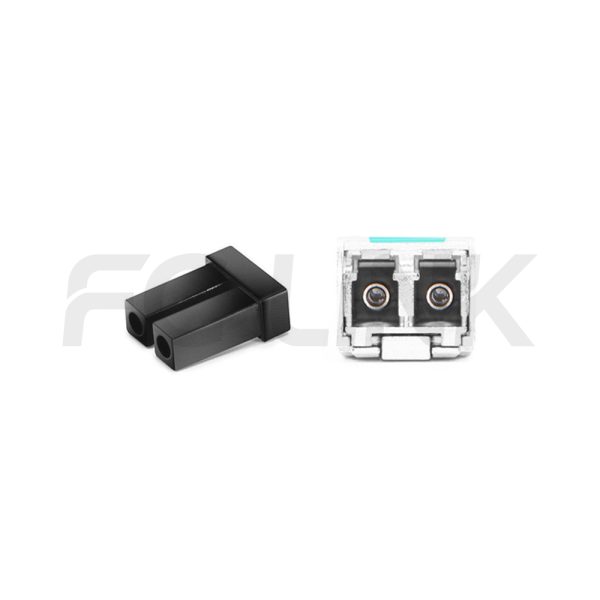
Package TypeSFP+Optical ConnectorDuplex LC
Max Data Rate11.3GbpsChannel Data Rate10.31Gbps
Power Budget>10dB,>14dB
Wavelength1270nm to 1610nmOperating Voltage3.3V
Fiber TypeSMFCore Size9/125µm
Transmitter TypeCWDM DFBReceiver TypeIDP
TX Power-1~4dBmReceiver Sensitivity-15dBm
Digital Diagnostic Monitoring(DDM)YESReceiver Overload0.5dBm
Power Consumption<1.2WProtocolsSFP+ MSA
SFF-8431
SFF-8472
Operating Temperature(Commercial)0℃~+70℃Storage Temperature(Commercial)-40℃~+85℃
Operating Temperature(Extended)-20℃~+75℃Storage Temperature(Industrial)-40℃~+85℃
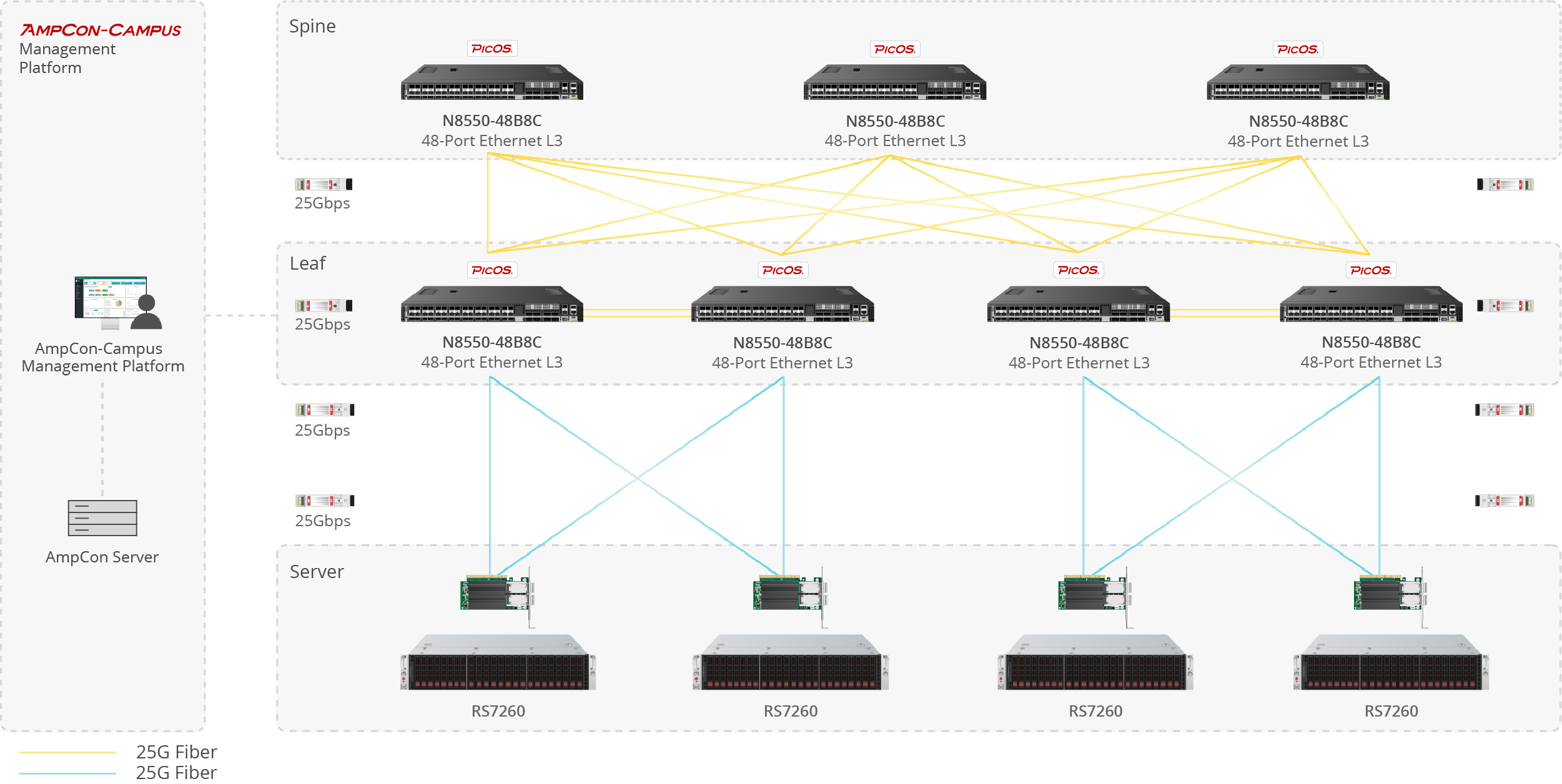
Server-to-Switch Data Center Links

Used for 10G/25G/100G optical uplinks between servers and top-of-rack switches in high-density data center deployments.

Building-to-Building Campus Backbone

Suitable for 1G/10G fiber links between office buildings, campus distribution rooms, and backbone aggregation points.

Access-to-Core Enterprise Uplinks

Designed for switch uplinks from access to aggregation or core layers in enterprise and campus network architectures.

Industrial Switching in Harsh Environments

Applied in industrial Ethernet, automation systems, and outdoor cabinets where wider temperature tolerance and stable fiber communication are required.


网络拓扑展示模块
1
1
1

Compatible Brands

Customization Options

Vendor Coding
Private Label
Custom Part Number
Packaging Design
Temperature Grade Selection
CWDM* Wavelength
Band Nomenclature Wavelength(nm)
Min. Typ. Max.
O-band original A 1264 1270 1277.5
B 1284 1290 1297.5
C 1304 1310 1317.5
D 1324 1330 1337.5
E 1344 1350 1357.5
E-band extended F 1364 1370 1377.5
G 1384 1390 1397.5
H 1404 1410 1417.5
I 1424 1430 1437.5
J 1444 1450 1457.5
S-band short wavelength K 1464 1470 1477.5
L 1484 1490 1497.5
M 1504 1510 1517.5
N 1524 1530 1537.5
C-band conventional O 1544 1550 1557.5
L-band long wavelength P 1564 1570 1577.5
Q 1584 1590 1597.5
R 1604 1610 1617.5
CWDM*:   18 Wavelengths from 1270nm to 1610nm,  each step 20nm. Please contact PHILISUN to confirm whether the wavelength is available.

Absolute Maximum Ratings
Parameter Symbol Min. Typical Max. Unit
Maximum supply voltage Vcc -0.5  - 4.0  V
Storage temperature Ts -40  - 85  °C

Recommended Operating Conditions
Parameter Symbol Min. Typical Max. Unit
Operating case temperature range Tc -5  - +70
Supply voltage Vcc 3.13  3.3 3.45  V
Supply current Icc - - 350  mA
Data rate - 0.614  - 11.3  Gbps

Electrical Ports Definition
Parameter Symbol Min. Typ. Max. Unit Notes
Transmitter
CML inputs(Differential) Vin 150 - 1200 mVpp 1
Input impedance (Differential) Zin 85 100 115 ohm -
Tx_DISABLE input voltage - high - 2 - Vcc+0.3 V -
Tx_DISABLE input voltage - low - 0 - 0.8 V -
Tx_FAULT output voltage - high - 2 - Vcc+0.3 V -
Tx_FAULT output voltage - low - 0 - 0.8 V -
Receiver
CML outputs (Differential) Vout 350 - 700 mVp-p 1
Output impedance (Differential) Zout 85 100 115 ohm -
Rx_LOS output voltage - high - 2 - Vcc+0.3 V -
Rx_LOS output voltage - low - 0 - 0.8 V -
MOD_DEF ( 0:2 ) VoH 2.5 - - V 2
VoL 0 - 0.5 V
Notes:
1. After internal AC coupling.
2. Reference the SFF-8472 MSA.

Optical Characteristics
Parameter Symbol Unit Note SFP+10-CW1216-LR-LCD-10X SFP+10-CW1216-LR-LCD-14X
Min. Typical Max. Min. Typical Max.
Transmitter
Output opt. pwr: 9/125 SMF Pout dBm 1 -5 - 0 -1 - 4
Optical extinction ratio ER dB - 3.5 - - 3.5 - -
Optical wavelength λ nm 2 λc–6 λc λc+7.5 λc–6 λc λc+7.5
-20dB spectrum width Δλ nm - - - 1 - - 1
Side mode suppression ratio SMSR dB - 30 - - 30 - -
Transmitterand dispersion penalty TDP dB - - - 2 - - 2
Average launch power of OFF transmitter POFF dBm - - - -30 - - -30
Receiver
Receiver sensitivity @ 10.7Gb/s Pmin dBm 3 - - -15 - - -15
Maximum input power Pmax dBm - +0.5 - - +0.5 - -
Optical center wavelength λ nm - 1260 - 1620 1260 - 1620
Receiver reflectance Rrf dB - - - -27 - - -27
LOS de-assert LOSD dBm - - - -16 - - -16
LOS assert LOSA dBm - -28 - - -28 - -
LOS hysteresis - dB - 1 - - 1 - -
*Notes:
1. Output power is coupled into a 9/125μm SMF.
2. ITU-T G.694.2 CWDM wavelength from 1270nm to 1610nm, each step 20nm.
3. Average received power; BER less than 1E-12 and PRBS 2
31-1 test pattern.

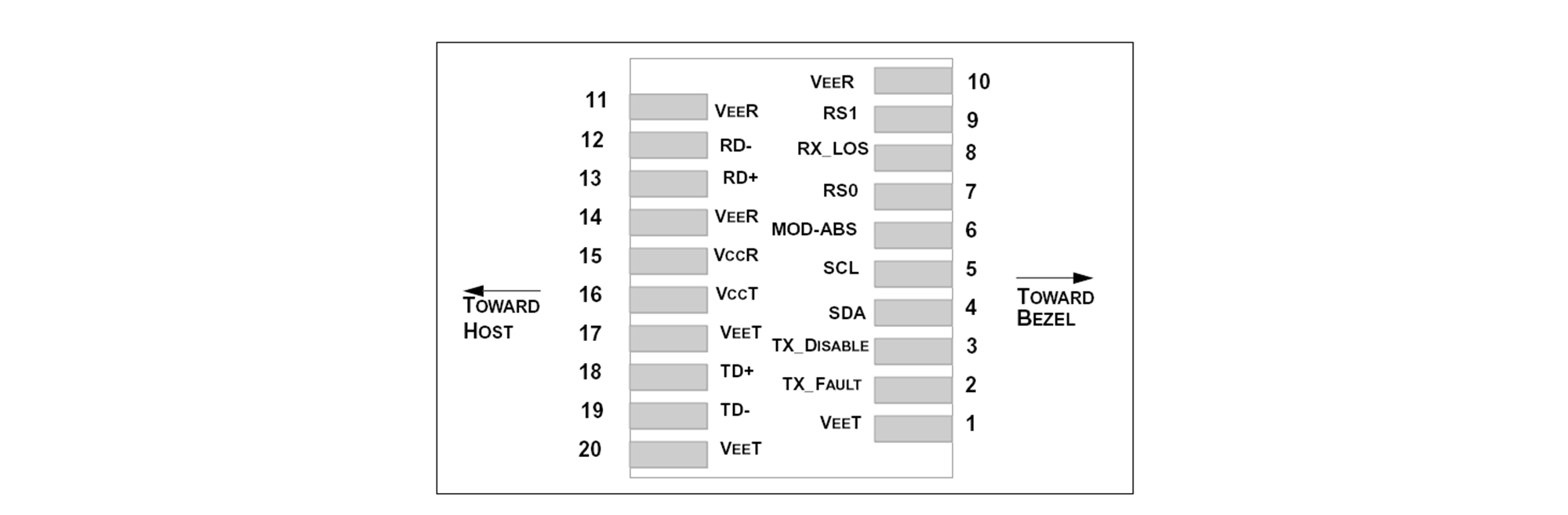
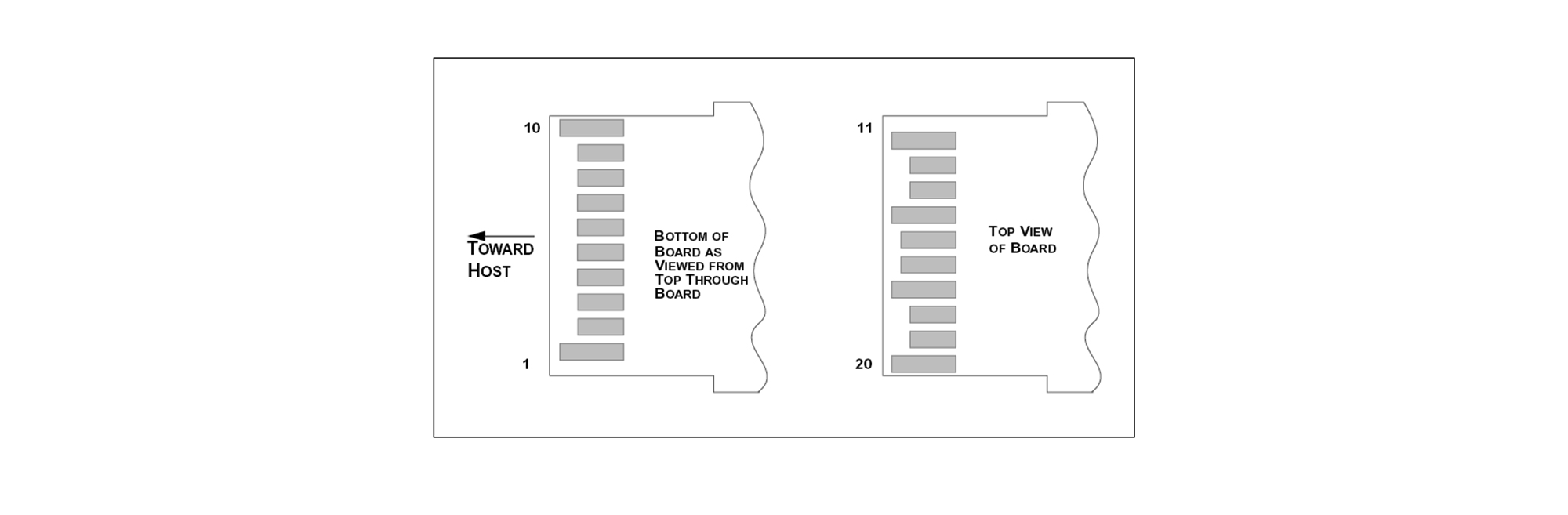
SFP+ TRANSCEIVER ELECTRICAL PAD LAYOUT

PIN FUNCTION DEFINITIONS
Pin Name Function Plug Seq. Notes
1 VeeT Transmitter ground Note 5
2 TX Fault Transmitter fault indication Note 1
3 TX Disable Transmitter disable Note 2, module disables on high or open
4 SDA Module definition 2 Data line for serial ID
5 SCL Module definition 1 Clock line for serial ID.
6 MOD-ABS Module definition 0 Note 3
7 RS0 RX rate select(LVTTL). No function implement.
8 LOS Loss of signal Note 4
9 RS1 TX rate select(LVTTL). No function implement.
10 VeeR Receiver ground Note 5
11 VeeR Receiver ground Note 5
12 RD- Inv. received data out 3 Note 6
13 RD+ Received data out 3 Note 6
14 VeeR Receiver ground Note 5
15 VccR Receiver power 3.3V ± 5%, Note 7
16 VccT Transmitter power 3.3V ± 5%, Note 7
17 VeeT Transmitter ground Note 5
18 TD+ Transmit data in Note 8
19 TD- Inv. transmit data in Note 8
20 VeeT Transmitter ground Note 5
Notes:
1) . TX Fault is an open collector/drain output, which should be pulled up with a 4.7K - 10KΩ resistor on the host board. Pull up voltage between 2.0V and VccT, R+0.3V. When high,output indicates a laser fault of some kind. Low indicates normal operation. In the low state, the output will be pulled to < 0.8V.

2) . TX disable is an input that is used to shut down the transmitter optical output. It is pulled up within the module with a 4.7-10K Ω resistor. Its states are:
Low (0 - 0.8V): Transmitter on
(>0.8, < 2.0V): Undefined
High (2.0 - 3.465V):Transmitter Disabled
Open: Transmitter Disabled

3)Module absent, connected to VEET or VEER in the module.

4) LOS (Loss of Signal) is an open collector/drain output, which should be pulled up with a 4.7K–10KΩ resistor. Pull up voltage between 2.0V and VccT, R+0.3V. When high, this output indicates the received optical power is below the worst-case receiver sensitivity (as defined by the standard in use). Low indicates normal operation. In the low state, the output will be pulled to < 0.8V.

5) VeeR and VeeT may be internally connected within the SFP+ module.

6) RD-/+: These are the differential receiver outputs. They are AC coupled 100Ω differential lines which should be terminated with100Ω(differential) at the user SERDES. The AC coupling is done inside the module and is thus not required on the host board.

7) VccR and VccT are the receiver and transmitter power supplies. They are defined as 3.3V ±5% at the SFP+ connector pin. Maximum supply current is 300mA. Inductors with DC resistance of less than 1 ohm should be used in order to maintain the required voltage at the SFP+ input pin with 3.3V supply voltage. When the recommended supply-filtering network is used, hot plugging of the SFP+ transceiver module will result in an inrush current of no more than 30mA greater than the steady state value. VccR and VccT may be internall connected within the SFP+ transceiver module.

8) . TD-/+: These are the differential transmitter inputs. They are AC-coupled, differential lines with 100 differential termination inside the module. The AC coupling is done inside the module and is thus not required on the host board.

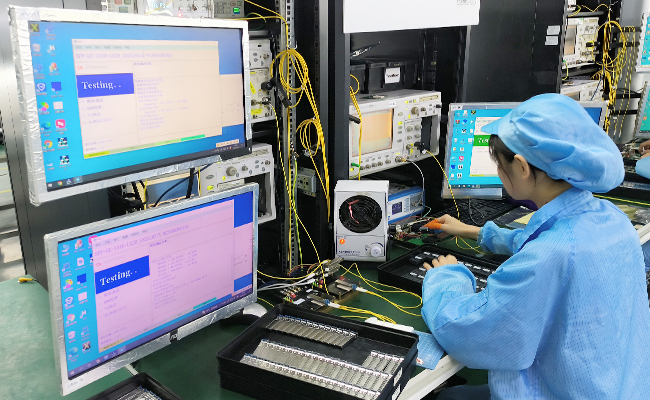
Performance Testing

Each module is tested before shipment to help ensure stable optical and electrical performance.
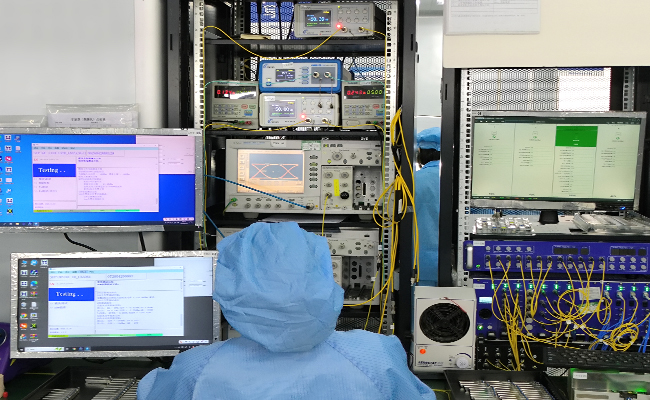
Compatibility Verification

Compatibility validation is available for major switch and router platforms.
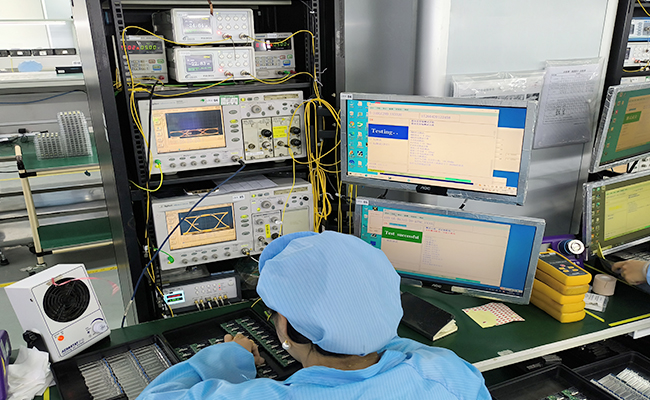
Reliability Screening

Selected products support aging, temperature cycle, and stability testing for demanding applications.
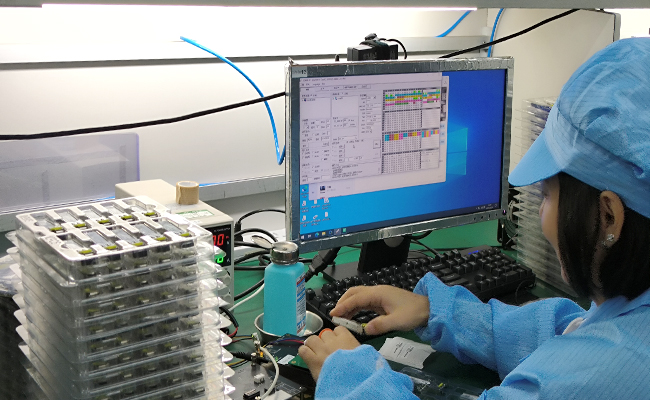
Traceable Quality Control

Inspection and production records support more consistent quality control and batch traceability.

光模块产品详情订购信息---SFP+(CWDM/DWDM)